Business First.
Ultimately,
What's Next?
Tomorrow you open your doors to new customers — and only when the day is done do you open sales reports and forecasts. Not the other way round. Tanelu prioritizes business processes over specific features.
What we have is a freeway from procurement to delivery. But there are side roads too — you're free to be forgetful and sporadic.
Order Orchestration
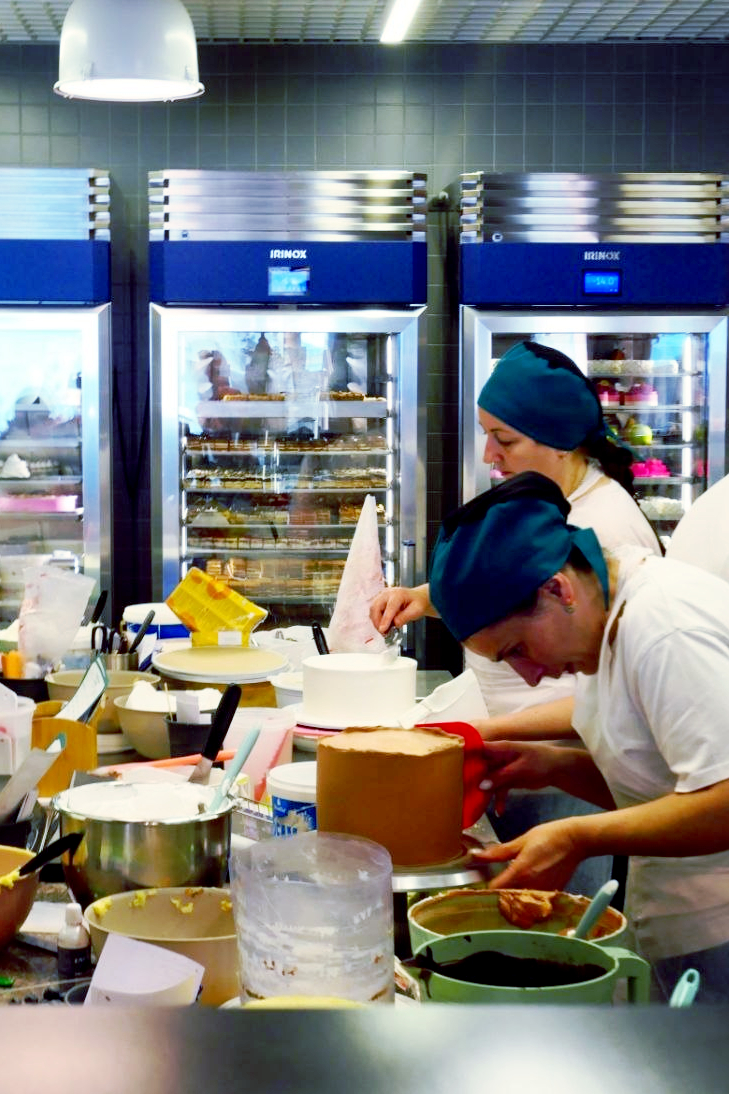
A customer places an order for 5 three-tier cakes and gets an “accepted” notice. What happens behind the scenes is:
- 01Do we have ingredients for that?
- 02Do we have equipment to complete the order?
- 03Will there be enough hands to execute the order?
Ultimately, can a Commis chef use a whipping machine, one Pastry Chef do the levelling — all of this without destroying quality and delivery times? Hmm...
Solution — all components of the process are factored in
- 01
Each team member is defined by their skills.
- 02
Each recipe requires skills, equipment and ingredients.
- 03
A recipe may be associated with a process
A sequence of steps that may be executed consecutively or concurrently.
These relationships build processes and keep gut feelings out of the picture next time a breakout order comes in.
Recipe-level Cost Control
You might be scared to approach an enterprise-grade solution which promises tonnes of reporting. But do you actually wake up wanting an ABC/XYZ report?
Sales and inventory reporting stays with you when you run your business with Tanelu. The difference is: you don’t just contemplate what is happening — it takes you one step away from knowing what to do about it:
“This day: you make 9 croissants and sell 7 on average. Make 6 to save AMD 1600.”
“Chocolate cake will lose AMD 10000 in sales next week.”
“You’re out of chocolate cake by 15:00 on 3 of the past 4 Saturdays. Add 2 more pcs to earn AMD 2400.”
Traditional BI
Tanelu
Higher Sell-through and less Wastage
Board of Arrivals lets customers reserve a batch while it is still in production. That moves demand ahead of the completion date. For an item with a long production time and a short shelf life, a share of the batch can be sold before the clock on its shelf life starts.
The waitlist is a second benefit that augments the mainstream order flow. And, apparently, an additional revenue stream.
On the customer end it works like a taxi app, taking current location, searched text and, optionally, preferred sellers.
Plan your output and scale to meet increasing demand. If your sign says “Hot Bread”, your local customers will return for what it says.
Staff Scheduling
It’s 5:40 a.m. The dough has rested, the oven is free, and the one person who can laminate it called in sick. Your roster says three people are on shift. Your prep plan needs one specific person. The two have never met, because one lives in a spreadsheet and the other in your head.
Most scheduling tools treat people as usernames on a calendar. Tanelu treats them as what they are: the person who tempers the chocolate, the one who shapes the loaves, the one who can run the packing line alone. Each person comes with their skills, and the schedule feeds the same flow as your inventory, recipes and equipment. The prep plan only asks for work that someone on shift can do, on equipment that is free, with ingredients that are on the shelf.
What changes
- 01
Skills, not just names.
Shifts are built around who can do what, not who is free on Thursday.
- 02
One source for the day’s production.
Staff, stock, recipes and equipment are read together, not reconciled by hand over coffee.
- 03
No more availability by WhatsApp.
No chasing replies in a group chat to find out who can come in.
You get fewer 5 a.m. phone calls and fewer “just in case” shifts. A promised order no longer depends on one person staying healthy. Noah gets his Saturday back, and Zoey’s cheeses still get turned on time.
What else could it be, other than simple?
Tanelu was built in response to restaurant management solutions that demand implementation engineers, heaps of outdated documentation, scheduled visits and training workshops. Fast-forward a few weeks and you're filing a ticket with customer support. Fast-forward again and there's no one left to onboard new team members.
Business interruptions? Say that again. You have no time, and we genuinely value that. We don't allocate teams to rescue people lost in navigation or documentation — but we do want to hear back from you.
- 0
- Implementation engineers
- 0
- Training workshops scheduled
- ~1
- Afternoon to get going
- 1
- Screen to learn
Minimum overhead. No, really.
You don't wake up wanting dashboards. What you want is less micromanagement. Tanelu doesn't pretend to be an all-in-one solution for hotels, chain stores and space platforms.
It was built for Noah at the pastry shop downstairs, and for Zoey making the best long-fermented cheeses in the neighborhood. They dream big — but that doesn't mean they dream of an ERP. They want a digital operations manager that respects their attention span. We think that holds true for a business of any size.
Tanelu removes unnecessary overhead by:
- 01
Matches how ingredients are actually used
Not how a textbook says they should be. Tanelu maps to your real prep, not an idealized supply chain.
- 02
Guides you through inventory tracking
Rather than mandating software architecture. You count what matters, when it matters.
- 03
Keeps food cost steady
No more swinging like a caffeinated pendulum. Predictable numbers, fewer surprises.
Data is our passion.
Data became the new oil decades ago — and since 2006 that's been a trite expression. Trouble is, this oil runs deep inside on-premise solutions and expires before use.
Tanelu collects data to remove the deadlocks where users get frustrated — long before the service desk is overwhelmed by the same question, before a product owner returns from parental leave, before the team schedules a fix for next quarter.
“Are you reading this while building a roster and waiting for staff to send availability in a WhatsApp chat?”
Commercial data is the product itself — and that includes:
- 01Purchasing recommendations
- 02Automated prep plans
- 03Capacity management
- 04Staff management
- 05Recipe enforcement
- 06Unified order flow
One screen. Because it's just natural.
Customers would rather order pizza and drinks in one place and pay once, without switching between apps. First impressions matter — and so does the second, third and hundredth order.
The same idea drives Tanelu. A kitchen receives orders from many sources: by phone, online, from Yandex or Glovo. An “all-in-one leading industry solution” usually means a POS app, a kitchen screen, a third-party waiter app and licensed supplier connectors — a patchwork of tools with wildly inconsistent interfaces.
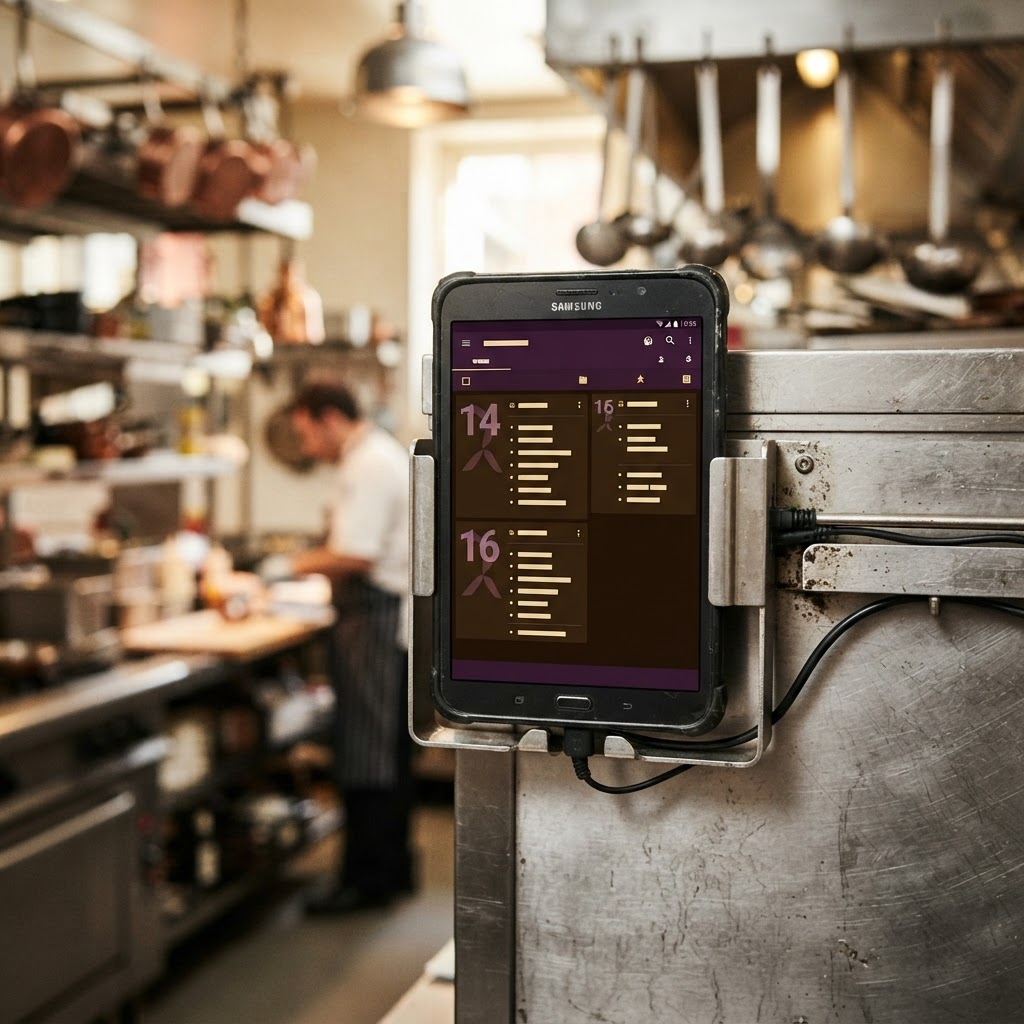
That's where Tanelu perfects the unified interface. You want one arrivals-and-departures screen, because it's just natural. With everything on a single screen, your team spends less time switching tabs, learning interfaces, or waiting for someone to troubleshoot yet another integration.
The old patchwork
A digital operations manager. Not another ERP.
Start tomorrow morning. Open the doors first — the reports can wait until the day is done.